
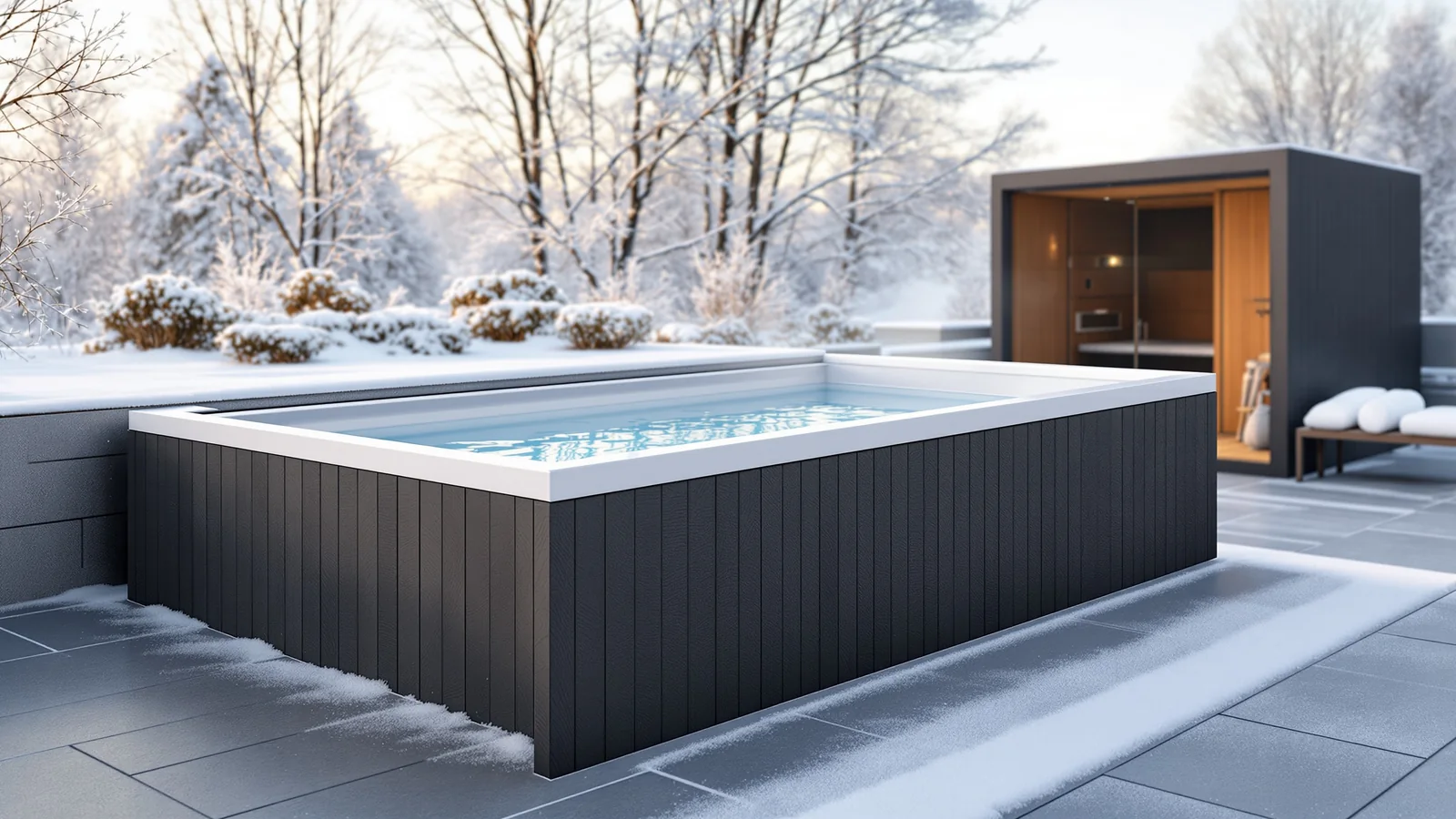
Cold plunge, ice bath, contrast therapy — over the last few years cold exposure has gone from a Nordic ritual to a mainstream recovery tool. With the trend came a flood of improvisations: barrels of ice, converted chest freezers, inflatable tubs with bags of ice.
All of it technically „works“ — it delivers the cold shock. The problem isn’t the effect once or twice, but what happens when you want cold exposure as a routine: unstable temperature, water hygiene, and the constant effort around ice quickly turn a good idea into something rarely used.
This guide breaks down what separates a real cold plunge system from improvisation, why temperature control and hygiene change everything, what outdoor year-round installation takes — and when DIY is genuinely enough, and when it isn’t.
Step 01What a cold plunge actually is
A cold plunge is controlled cold water you enter briefly, deliberately and repeatedly. The key words are controlled and repeatable — not „as cold as it happened to turn out today“.
With improvisation, the temperature depends on how much ice you bought and how warm the day is. As a system, a cold plunge holds the set temperature automatically. That difference — the same temperature every time — is why a routine becomes sustainable at all.
Step 02What makes a real system (not an ice barrel)
A real cold plunge is set apart by a few things improvisation doesn’t have:
Temperature control. An inverter heat pump both heats and cools the water and holds it at the set value. The range runs roughly from 4°C to 40°C, meaning full control — ice-cold for recovery, or warmer when needed.
Filtration and disinfection. A skimmer and a UVC lamp keep the water clean. That’s the difference between water you use for weeks and water you keep dumping and refilling.
Circulation and automation. The system runs itself — no buying ice, no topping up, no guessing the temperature.
Durable outdoor construction. The cladding (WPC or thermo wood) and components are built for permanent outdoor use, not seasonal storage.
None of this is needed to take one ice bath. All of it is needed to do it every day, year-round, without it becoming a burden.
Step 03Why DIY doesn’t scale
A barrel of ice or a converted freezer is a cheap entry and perfect for trying it out. The limit shows up when you want cold exposure seriously and long-term:
Temperature is unpredictable. Ice melts, the day is warm or cold — the water is never the same. For a recovery routine, consistency matters more than the extreme.
Hygiene is a problem. Standing water without filtration quickly becomes unusable, so you change it constantly — a cost in water and time.
Effort kills the habit. Every trip to buy and carry ice is friction. What takes effort gets used rarely; a system that runs itself gets used regularly.
Honestly: if you want to try cold exposure before investing, start with ice. That’s smart. But don’t expect improvisation to last a year of daily use — it wasn’t built for it.
Step 04Temperature control and year-round operation
The biggest advantage of a heat pump isn’t just cooling — it’s that it covers the whole year. In summer it cools the water well below the outdoor temperature; in winter it holds it at the set value without freezing.
Improvisation depends on outdoor conditions: in summer it’s hard to cool enough, in winter ice isn’t the problem but hygiene and access are. A system gives the same controlled temperature regardless of season.
That consistency is what turns cold exposure from an occasional experiment into a real routine — and a routine is the only thing that produces a result.
Step 05Hygiene and water care
Filtration (a skimmer) and UVC disinfection keep the water clean between changes. Instead of dumping the water after each use, the system keeps it usable for weeks.
Maintenance exists, but it’s predictable: a check, the occasional water change, looking after the filter. The cover helps here too — it keeps debris out and reduces how often the water needs attention. It’s a routine measured in minutes, not improvisation measured in bags of ice.
Step 06Outdoor installation: prerequisites
Base and load-bearing. A tub full of water with a user in it is far heavier than empty. The base has to carry that filled weight — level, stable and sized for the real load.
Power. The heat pump needs a suitable electrical connection — planned before installation, not after.
Drainage. Plan for controlled emptying when changing water or servicing.
Position. Proximity to the sauna or house, privacy and access affect how much the cold plunge actually gets used — which is, in the end, the only measure of whether it pays off.
The technical prerequisites for base, power and drainage are covered in more detail in the Site preparation guide.
Step 07The cold plunge as part of contrast
A cold plunge rarely stands alone. It makes the most sense as the cold half of a contrast — alongside a sauna, in a hot → cold cycle. The sauna opens, the cold plunge closes; the alternation is the whole ritual. The physiology is explained in the Contrast therapy guide.
KUBIQ’s approach starts from that whole. We don’t choose for you, but we help tell a serious system from improvisation and choose what makes sense for your space and how you’ll use it. The tub arrives ready; we deliver, install and explain it, and service is local — you don’t call abroad.
Step 08Health and when a cold plunge is NOT the right choice
Cold exposure is associated with faster recovery, alertness and stress resilience. Some claims rest on firmer ground, some are still open in the research, and the response is individual. Cold is also a physiological stressor — with certain health conditions (heart problems, high blood pressure, pregnancy) consult a doctor before starting.
A cold plunge system probably isn’t the right choice if:
You only want to try it. For a few attempts, a barrel of ice is enough and a smart first step.
The space has no power or stable base and you don’t plan to sort them.
You want warm relaxation, not cold recovery. Then a hot tub is the more logical choice — or both, as a contrast.
A cold plunge system pays off for those who want cold exposure as a permanent, daily routine. For everything else there are simpler solutions — and it’s better to know that before deciding.