
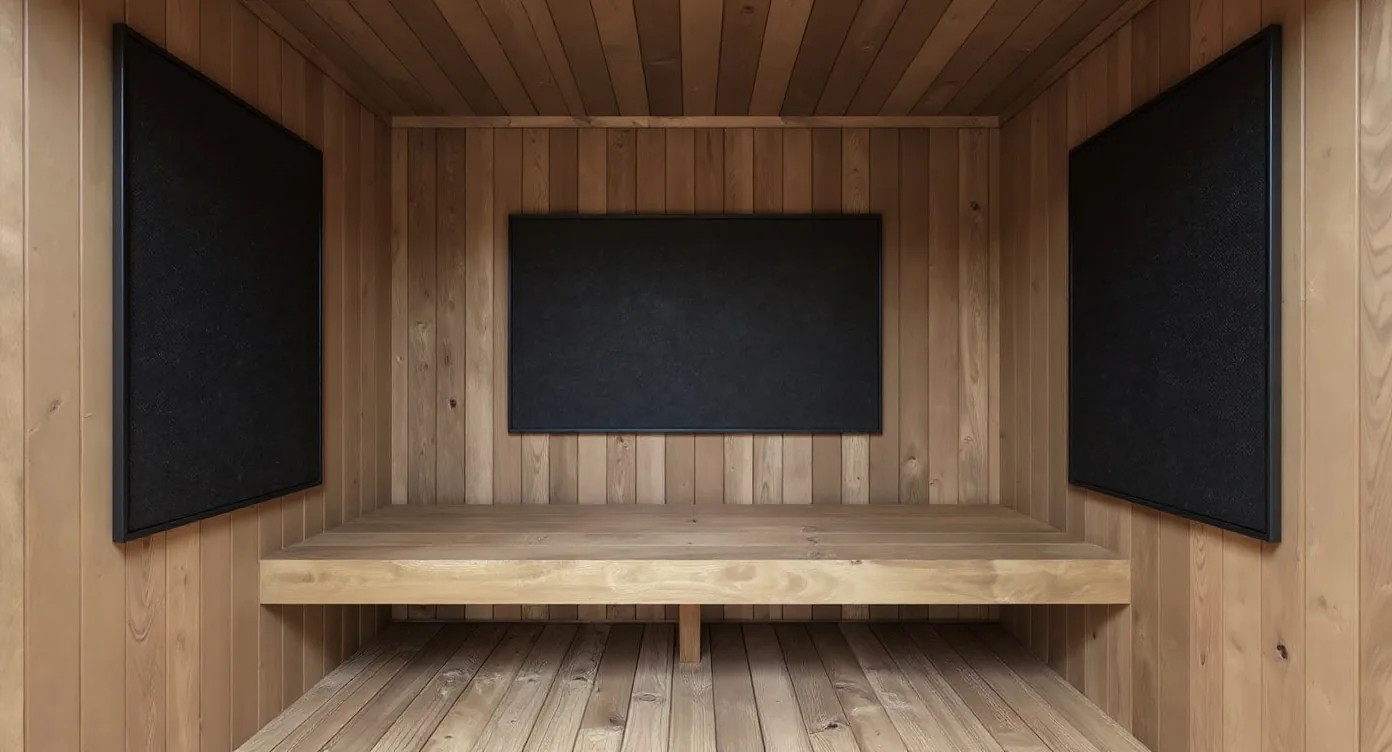
Infrared (IR) sauna is often perceived as a “milder Finnish sauna”. In reality, it operates on a fundamentally different physical principle. Where a classic sauna heats the air, and the air then heats the body, an IR sauna heats the body directly through radiation in the infrared spectrum. The air remains relatively cool, but body temperature rises as it does in a classic sauna — often more than the ambient thermometer would suggest.
IR sauna is not weaker than Finnish sauna. It is simply different. A different mechanism, a different ritual, a different application.
This article assumes that → Sauna ritual has already been read. It covers radiation physics, types of IR emitters, a typical protocol, a balanced overview of proven and unproven effects, and safety specific to working with infrared radiation.
What this article does not try to be: a list of “10 benefits of infrared sauna”. The industry is full of exaggerated claims that peer-reviewed literature does not support. The KUBIQ approach is different — what is proven is enough for a valuable investment; fluff is not needed.
Step 01What defines an IR sauna — the physics
A classic sauna (Finnish, BIO) works through convection: the heater warms the air, the air warms the body. An infrared sauna works through radiation: the IR emitter emits electromagnetic waves in the infrared part of the spectrum, those waves are absorbed in the tissue and convert into heat at cellular level.
Air temperature in an IR sauna: 35–65°C. Significantly lower than Finnish sauna, similar to the lower range of BIO sauna. But body temperature rises as it does in a classic sauna — radiation heats the subcutaneous tissue directly, not through the air. The thermometer shows 50°C, but the body feels as if it were in a 65°C environment.
No stones, no pouring water, no bipolar character. IR sauna has no heater that holds thermal mass and no water that creates steam. The character is continuous — emitter on, radiation constant, environment stable throughout the whole session. No löyly waves, no dry/humid air contrast.
Difference from other modes:
- Finnish: convection + radiation from the heater → air is heated first, then the body
- BIO: convection + continuous steam → air is heated and humidity is supported
- IR: only direct radiation onto the body → air remains cool
- Steam bath: convection + 100% humidity → wet warm air transfers heat
This difference has an important practical consequence: IR sauna is not a sauna in the traditional sense. It is closer to a thermal cabin for recovery than to sauna as a cultural practice. Tradition, atmosphere, the smell of wood, pouring water over stones — all of that is missing. If that is what makes a sauna a sauna, IR is a disappointment. If the goal is functional recovery in a shorter time — IR is the optimum.
Step 02Types of IR emitters and spectra
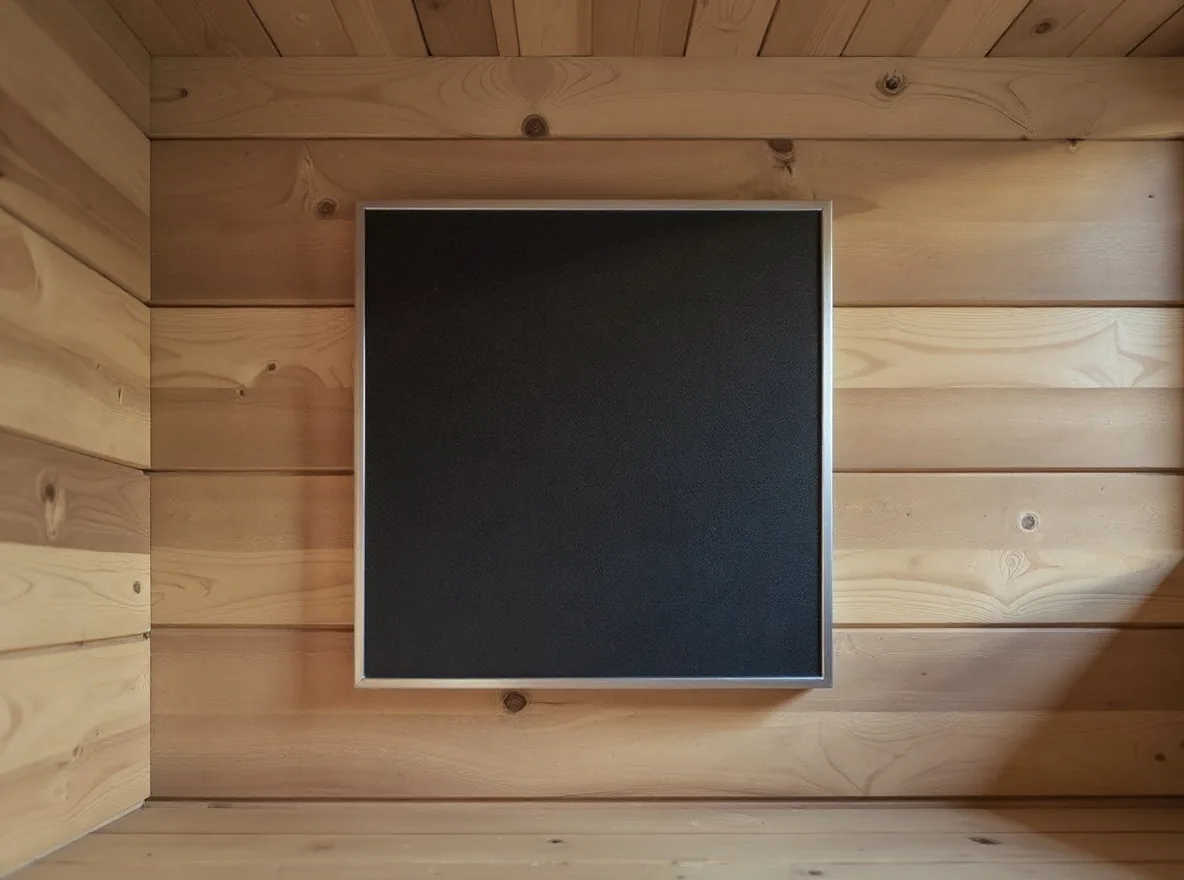
The infrared spectrum is not uniform. It is divided into three classes by wavelength, each with a different penetration into tissue:
NIR — Near Infrared (0.7–1.4 μm). Short wavelength, deep penetration (up to 5 mm into the skin and subcutaneous tissue). More locally intense, but with a smaller coverage area. Often found in “red light therapy” panels and full spectrum saunas.
MIR — Mid Infrared (1.4–3 μm). Medium penetration (1–4 mm), heats subcutaneous tissue. Less often used as a standalone type, more often part of full spectrum combinations.
FIR — Far Infrared (3–1000 μm). Shallower penetration (1–3 mm), heats the surface layer of the skin, which then transfers heat deeper by conduction. The most common type in modern IR saunas — gentler, more even, with a less “hot” feeling on the skin. Most commercial “infrared saunas” are actually FIR saunas.
Types of emitters in saunas:
- Carbon panel — the modern standard. Broad emission, even temperature across the entire panel surface, distributed over large wall areas. Lower peak intensity but wider coverage. The most common choice in premium IR saunas today
- Ceramic emitter — older type. More locally intense, less diffuse, remains hot for longer. Found in older saunas or in sports recovery cabins where local intensity is required
- Full spectrum (NIR + MIR + FIR) — premium option, combines all three classes. Does not require long preheating (immediate thermal effect), more intense than FIR. Significantly more expensive. Questionably justified for most users — FIR alone covers most recovery applications. Full spectrum makes sense in clinical or professional sports environments
KUBIQ IR configurations use carbon panels as standard. → Components / IR panels
Step 03Who IR sauna is suitable for
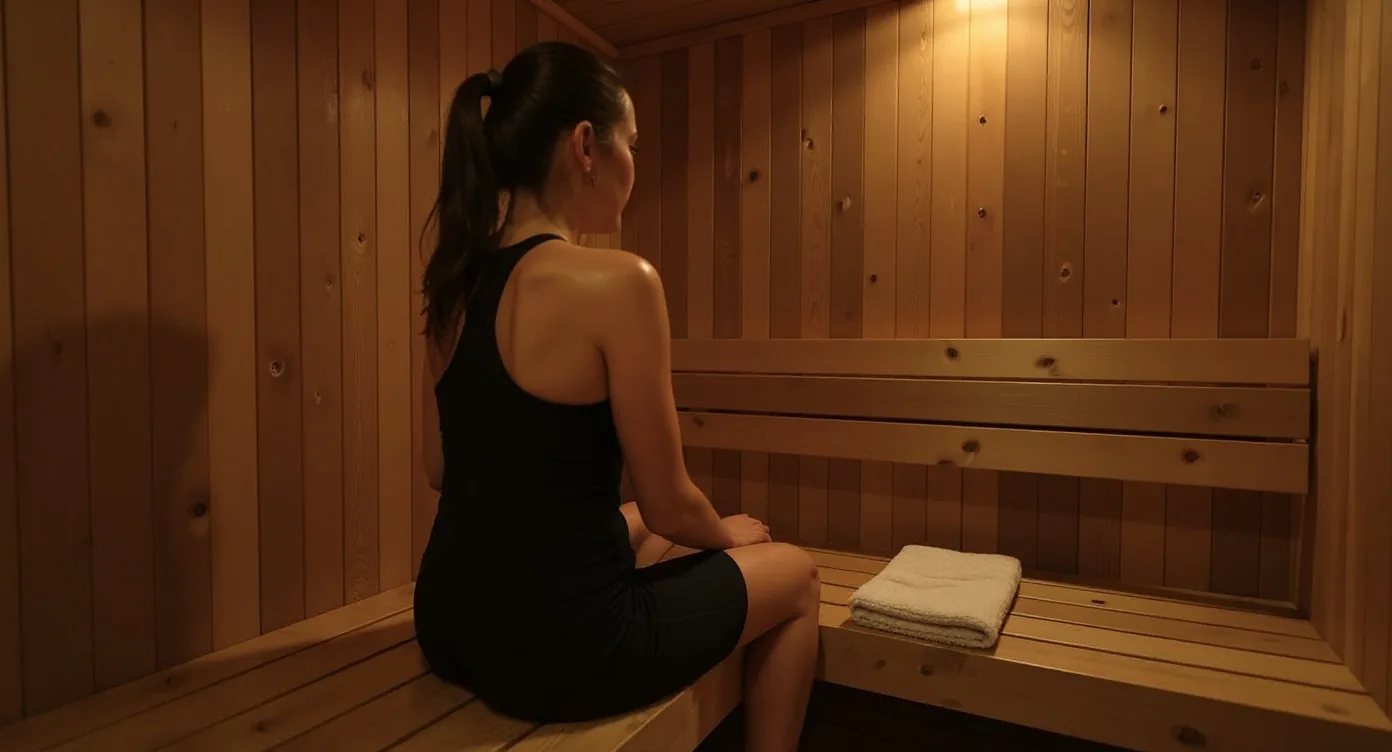
IR mode has clear primary target groups — categories of users for whom this physics brings a concrete advantage.
Athletes for recovery. The strongest application of IR mode. Local heat on tired muscles, shorter sessions (20–30 min), lower cardiovascular stress means it can be used daily without accumulating fatigue. Especially useful for DOMS (delayed onset muscle soreness) — delayed muscle pain after intense training. Often combined with contrast therapy for maximum recovery effect.
People sensitive to high temperatures. A 35–50°C ambient temperature is tolerable for almost everyone. Older users, people with low tolerance for thermal stress, users with mild cardiovascular limitations (with medical advice) — IR provides a sauna effect without aggressive temperatures.
Users with limited time. Full IR ritual: 30–40 min total (20 min session + warm-up + quick cooling). Finnish sauna requires 60–90 min for a full three-cycle ritual. For someone who has only 30 min, IR is a realistic option; Finnish sauna is not.
Chronic muscle and joint pain (with medical advice). Local heat has a documented analgesic effect — IR sauna applies that logic systemically. For people with chronic muscular tension, mild arthritis, or those recovering after physical injuries, IR can be a useful adjunct to therapy.
Family use — with caution and lower temperatures, IR is generally better tolerated by children (6+ years) than Finnish sauna.
Who it is NOT suitable for: Those who want a classic “sauna experience” with atmosphere, the smell of wood, pouring water, ritual. IR sauna works functionally — but it is not an experience in the traditional sense. For that group → Finnish sauna is the right choice.
Step 04Typical IR protocol
The general framework from topic 1 applies, but IR mode works differently from Finnish or BIO sauna.
Session duration: 20 to 30 minutes. Longer than Finnish, shorter than BIO. A single session is usually enough for most applications.
Position in the sauna:
- Sitting, back towards the emitters — direct intense flow of radiation onto large muscle groups (back, shoulders, gluteal group)
- NEVER look directly into the emitter. IR rays, especially the NIR component, can cause cumulative retinal damage. Closed eyes are standard during a direct IR session, or the gaze should be turned in the opposite direction
- KUBIQ IR configurations position emitters behind and to the sides, not in front — direct view into the emitter is avoided by design
A cyclic protocol is not mandatory. For most users, one 20–30 min session gives the full effect. A cyclic approach (2 × 15–20 min with 5–10 min cooling between) is an option for advanced users or a focused recovery protocol.
What to expect physiologically:
- Heart rate: 80–100 bpm (the lowest of all sauna modes)
- Sweating: starts gradually after 10–15 min, becomes abundant by minute 20
- Subjective feeling: a “warm wrap” from within, less stressful in character than Finnish sauna
Hydration: 0.3–0.5 l of water 30 min before, 0.3 l after a 30 min session. Less than Finnish sauna because thermal stress is lower, but not negligible.
Cooling: very mild. A lukewarm shower or room air is enough. Cold plunge does not have the same effect as when combined with Finnish sauna because the thermal contrast is too small (50°C → 5°C vs. 85°C → 5°C). For maximum contrast effect — combine IR with Finnish sauna during the week, not in the same session.
Step 05What IR sauna is documented to do — and what it is not
This section separates what peer-reviewed literature supports from what industry marketing claims. The KUBIQ approach is that honesty builds credibility long term — exaggerated claims build short-term traffic and long-term disappointment.
Documented in peer-reviewed literature:
- Local muscle relaxation and recovery — analgesic effect on acute and chronic muscle tension, well documented in sports medicine
- Gradual mild reduction of systemic blood pressure with regular use — modest effect, not a replacement for medication therapy in hypertension
- Heat shock protein response — a cellular adaptive response similar to the one in Finnish sauna, but at a lower intensity level
- Subjective reduction of chronic pain in some populations — limited evidence, not universal
- Vasodilation and peripheral microcirculation — a short-term but consistent effect
Unproven, marketing fluff, or exaggerated:
- “Detox” claims — the most widespread exaggerated claim in the IR industry. Sweating does not remove “toxins”. Kidneys and liver do that. Heavy metal content in sweat is present only in traces and clinically insignificant. “Detox sauna” is a marketing term, not a medical concept
- Weight loss — sweating causes temporary dehydration, not loss of body fat. Weight returns as soon as hydration is restored
- “Anti-aging” claims — unfounded
- Specific effects on cellulite — unfounded
- “Treatment” of specific diseases — IR sauna is not a medical treatment. It can be an adjunct to certain therapies under medical supervision, but it does not treat disease by itself
This is not medical advice, but a balanced overview of the literature. For individual medical applications of IR sauna — consult a physician.
What remains after this filtering is enough — IR sauna is a legitimate wellness tool with documented benefits in recovery applications, cardiovascular prevention and gradual improvement of circulation. A valuable investment without any need for exaggeration.
Step 06Differences from Finnish sauna and weekly distribution
| Feature | Finnish sauna | IR sauna |
|---|---|---|
| Temperature | 75–90 °C | 35–65 °C |
| Humidity | Low + löyly pulses | Very low (dry) |
| Mechanism | Convection — hot air heats body | Direct radiation heats skin and tissue |
| Session duration | 10–15 min × 2–3 cycles | 20–30 min once |
| Typical goal | Intensity, classic ritual | Recovery, gentle mode |
A detailed comparison of all modes is covered in → Combining modes. The practical consequence for selection:
IR is complementary to Finnish sauna, not a replacement. Different physics, different physiological goals. In a weekly rhythm, both have their place:
- Monday → IR sauna after training (recovery)
- Wednesday → shorter IR recovery session
- Saturday → Finnish sauna ritual with cooling and rest (classic ritual)
Do not combine IR and Finnish sauna in the same session — different physics mean different thermal regimes, and the combination disrupts thermoregulation and reduces the effect of both modes. → BIO sauna as a third option for softer, longer sessions.
Step 07Safety specific to IR
High temperatures are not the main risk of IR mode. The specifics arise from the nature of the radiation itself:
Eyes. Direct exposure of the retina to the emitter, especially the NIR component, can cause cumulative damage. Never look directly into the emitter. Closed eyes are standard during a direct IR session. Users with light hypersensitivity or chronic ocular conditions — consult an ophthalmologist before systematic IR sauna practice.
Head and face. The position in the sauna should be such that the emitter does not shine directly into the face. KUBIQ IR configurations solve this by design (emitters behind the back).
Skin. Gradual exposure. Sensitive skin may show mild erythema (redness) after the first session — this is normal and passes within 30–60 minutes. If redness persists for more than an hour or is accompanied by itching — reduce session duration.
Sunburn or recent UV exposure. Avoid an IR session for 24–48 h afterwards. UV-damaged skin is more sensitive to thermal stress.
Medications that increase photosensitization (some tetracycline antibiotics, antihistamines, skin retinoids): consult a pharmacist or doctor before IR sauna practice.
Pregnancy, cardiovascular diagnoses, diabetes with autonomic neuropathy. Medical advice is mandatory, as with all sauna modes.
Step 08Next step
IR sauna is a second tool for a different type of ritual. The choice between Finnish, BIO, IR and combined configurations depends on weekly practice, goals and space.
→ How to choose the right sauna — configuration guide
Thinking about your own sauna?
KUBIQ produces outdoor saunas in two tiers:
- kubiq.eu — standard models and configurations
- studio.kubiq.eu — bespoke, integrated wellness solutions
Explore the models or arrange a consultation — the first step is a conversation, not an offer.