
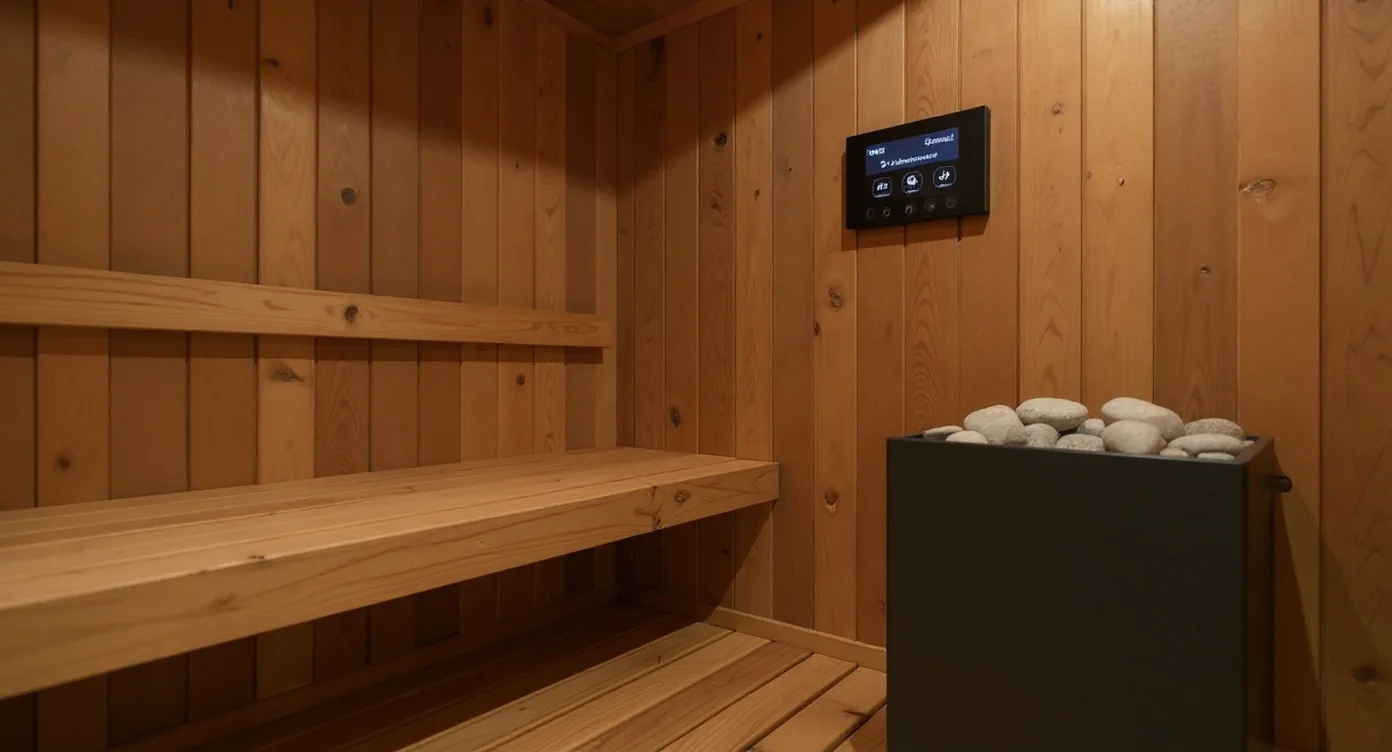
A multi-mode sauna is an instrument, not a luxury. Different modes — Finnish, BIO, infrared — do different physiological things. Using only one mode in a multi-mode sauna is equivalent to a guitar on which only two strings are played: technically it works, but most of what the instrument was built to cover is missed.
This article assumes that → Sauna ritual, → Finnish sauna, → IR sauna and → BIO sauna have already been read. The definitions of individual modes are not repeated here — the focus is on how to organize the modes with each other during the week.
What the article does NOT cover: concrete weekly plans by profile (recovery athlete, wellness enthusiast, family use). That is the topic of → Weekly examples. This article gives principles and rules; weekly examples give concrete plans.
Step 01Why combine — different physiological goals
The three modes are not variations of the same thing at different temperatures. Each solves a different problem.
Finnish sauna is cardiovascular and thermoregulatory training. High temperatures, bipolar character (dry air interrupted by löyly waves), intense stress-recovery cycle. It activates the heat shock protein response at a level BIO and IR do not reach. Optimum: 2 to 3 sessions per week, more is not better.
BIO sauna is prolonged thermal relaxation with low stimulus. Lower temperature with controlled humidity, longer sessions without aggressive cycles. Family-friendly, suitable before sleep, less “stressful” for the organism. Optimum: 2 to 4 sessions per week.
Infrared sauna is a local muscular recovery and circulation tool. The lowest cardiovascular stress of all three modes, short sessions, focus on direct radiation into tissue. Optimum: can be daily for active users.
The consequence is important: using only one mode in a multi-mode configuration means missing the physiological regimes that the other modes open. A multi-mode sauna exists to cover the full spectrum of thermal regimes through the week, not to offer three versions of the same thing.
Step 02Rule: not in the same session
Different modes work in different temperature and humidity ranges. Switching from one to another in the middle of a session disrupts thermoregulation.
Specifically: switching from Finnish at 85°C to BIO at 50°C in the same session causes thermal confusion. In the Finnish session, the body has entered high vasodilation and intense sweating. Switching to 50°C air with 50% humidity means:
- Vasodilation remains, but the thermal signal for it is reduced → sweating becomes inefficient
- Air humidity rises → heat transfer from the body to the environment becomes harder
- Subjectively: a feeling of “neither cold nor hot” that the organism does not understand how to interpret
A similar problem exists in the opposite direction: BIO → Finnish in the middle of a session means a jump of 30°C in one step, which is a type of thermal stress the body is not prepared to absorb.
An exception I mention but do not recommend for beginners: ending a full Finnish ritual with a short IR session (10 min) as a “soft landing” before exiting. Some advanced users do this as a tool for calming vasoconstriction after the final cooling. It works for some, but it is not a universal practice and can cancel the benefits of the recovery phase if performed poorly.
Main rule: one mode per session, combining in the weekly rhythm.
Step 03Basic weekly framework
| Day | Mode | Context |
|---|---|---|
| Mon | IR sauna | Recovery week start |
| Wed | BIO sauna | Wellness mid-week |
| Sat | Finnish sauna | Classic ritual weekend |
Principles for distributing modes through the week:
- Maximum 2 to 3 Finnish sessions per week — more is not better, it turns into accumulation of cardiovascular fatigue
- 48 hours between intense sessions (Finnish + → contrast therapy) for complete recovery
- BIO and IR can be used more often because of their milder intensity
- At least 1 to 2 rest days per week — sauna is thermal stress, the body needs a break just like after training
The schedule above (Mon IR, Wed BIO, Sat Finnish) is a “balanced default” — one illustrative example of the principle. Different profiles have different rhythms: an athlete uses IR daily, family use goes more often with BIO, a classic wellness profile may have 3 Finnish sessions per week. Concrete profile-specific plans are covered in → Weekly examples.
What does not change across profiles are the principles: maximum Finnish sessions, minimum recovery days, distance between intense sessions.
Step 04Seasonal adaptation
The body naturally prefers different thermal regimes in different seasons. Ignoring that rule does not make practice impossible, but it reduces subjective comfort and physiological efficiency.
Winter.
- More Finnish sessions — the thermal contrast with cold outdoor air is maximal, physiologically the most productive season for Finnish sauna
- Humid BIO-mode air against the dry seasonal atmosphere of indoor heating
- Cold plunge gains a special contrast with the icy outdoor environment — Nordic sauna tradition in snow has a reason
- Aromatherapy: eucalyptus (respiratory), birch (classic)
Spring.
- Transition season — gradual reduction of Finnish intensity
- More IR for the transition from “winter in the body” — muscular tension accumulated during winter, reduced physical activity
- Scents: mint, citrus (refreshment)
Summer.
- Lower appetite for Finnish sauna — outdoor temperatures make recovery harder, contrast is smaller, sweating outside the sauna already happens
- BIO and IR come into focus — lower ambient temperature is welcome in the warm season
- Additional attention to hydration (the body is already dehydrated by summer heat)
- Scents: pine, spruce (forest-like, cooler)
Autumn.
- Gradual reintroduction of Finnish sauna as outdoor temperatures fall
- Aromatherapy focus — preparing immunity for winter (eucalyptus, birch)
- Scents: lavender (relaxing transition from active summer to contemplative winter)
Seasonal adaptation is not a system of rules, but a set of recommendations that follow the natural thermal rhythm of the environment. Anyone who has tried Finnish sauna in icy snow knows the difference between that and Finnish sauna in August at 35°C in the afternoon — it is not the same practice, regardless of the thermometer inside the sauna.
Step 05How to choose the mode for today
The simplest question:
What do I need today — intensity, recovery or calm?
- If I want intensity and a classic ritual → Finnish sauna
- If I want recovery and dry heat → IR sauna
- If I want calm and longer relaxation → BIO sauna
That is a good enough guide for most users in everyday decisions. The weekly plan sets the framework; current feeling decides inside the framework.
Step 06Five common mistakes when combining
1. Multi-mode in the same session. Already covered in §2, but repeated because it is the most common mistake of new multi-mode sauna users. The logic “when I have three modes, I use three modes” is understandable, but physiologically counterproductive. One mode per session, combining during the week.
2. Too-frequent Finnish sessions. The idea “more = better”. The truth is the opposite: after 3 Finnish sessions per week, benefit decreases (heat shock response stops being activated and becomes “routine stress”), while the risk of cardiovascular accumulation rises. Sauna is not CrossFit — more sessions do not mean faster progress.
3. IR as a replacement for Finnish. Different physiological goals. IR does not replicate the cardiovascular stress of Finnish sauna, Finnish does not replicate the local muscle recovery of IR. Someone who thinks IR “replaces” Finnish when there is no time for a full ritual is using the wrong mode for the wrong application. Shorter Finnish sessions (1 cycle, 15 min total) are a better replacement for Finnish than a full IR session.
4. Using BIO as a “lighter Finnish”. BIO is not a weaker version of Finnish, but its own mode with its own purpose (prolonged relaxation, not intense stress-recovery). Understanding BIO as a standalone mode changes the approach — you do not go to BIO because you “cannot do Finnish”, but because BIO gives something else.
5. Ignoring recovery days. Seven sauna sessions per week (one every day) is not optimal, even if all are mild IR. The body needs days without thermal stress for real adaptation. Sauna creates cellular stress that produces adaptation in the recovery phase — without the recovery phase, stress remains stress, without adaptation.
Step 07What if you have only one mode
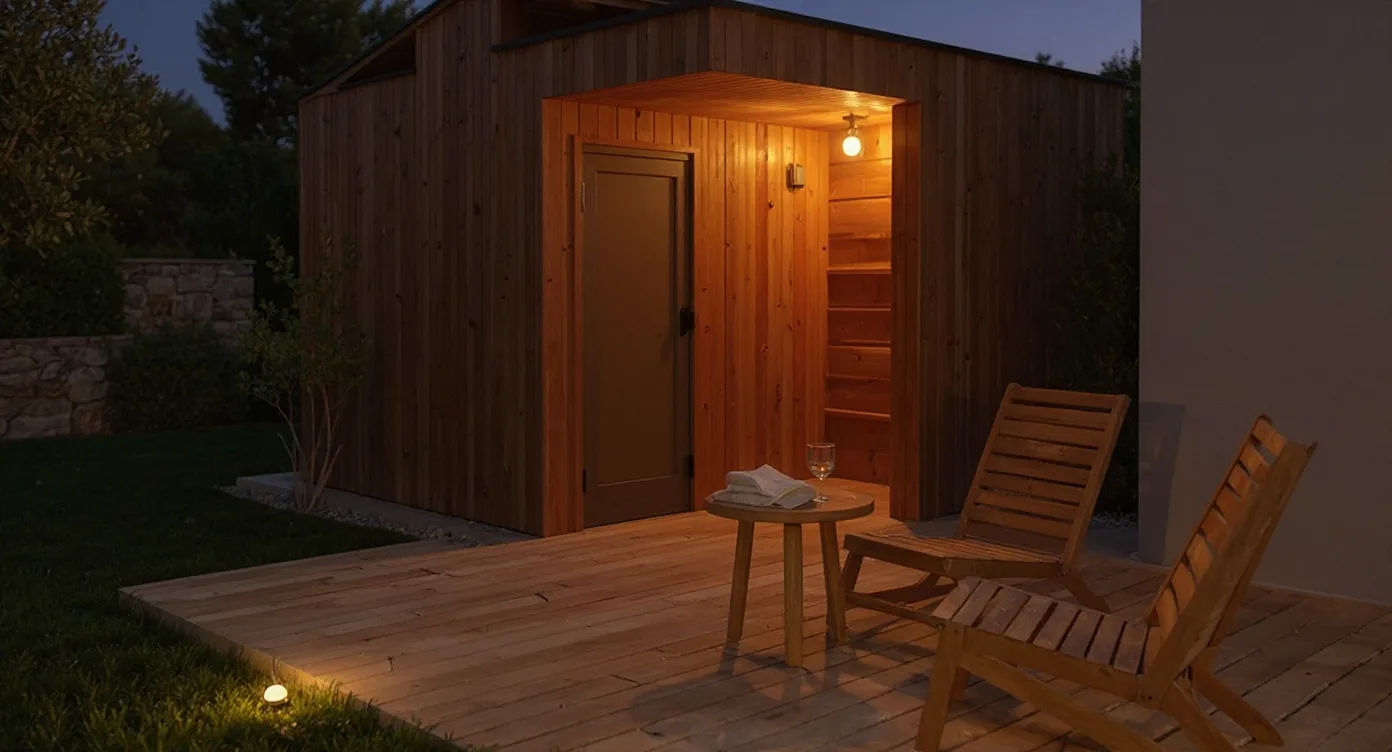
The real situation for many users is a sauna with one mode. Multi-mode configuration is an option, not a prerequisite for meaningful use.
Only Finnish. Enough for a full ritual. Variations through intensity: shorter sessions, lower temperatures (70°C instead of 85°C), less pouring over stones for “mild” days. Maximum 3 times per week remains the rule. No “fake IR session” at 50°C — Finnish sauna is not designed to operate in that range.
Only BIO. Longer sessions as the basis, variations through duration and scents. Can be daily if intensity is varied (30 min vs. 45 min, lower vs. higher humidity). Family use is the main advantage of this scenario — BIO covers both adults and children (with limitations) without needing another mode.
Only IR. Short sessions, variations through gradual increase of exposure for tolerance progress. The most flexible option for daily use. Less “ritual” experience, more functional recovery tool. Athletes and people with limited time often stay only with IR and that is enough for them.
One mode is not a deficiency — it depends on what is required. An athlete with limited time works well with IR only. A wellness-oriented family can spend years with BIO only. Classic Finnish sauna tradition does not need anything else.
Step 08Next step
A multi-mode configuration opens the full spectrum of thermal regimes, but the choice between a multi-mode and single-mode sauna depends on how it is planned to be used through the week. That is a decision made before purchase, not afterwards.
→ How to choose the right sauna — configuration guide
For concrete weekly plans by profile → Weekly usage examples.
Thinking about your own sauna?
KUBIQ produces outdoor saunas in two tiers:
- kubiq.eu — standard models and configurations
- studio.kubiq.eu — bespoke, integrated wellness solutions
Explore the models or arrange a consultation — the first step is a conversation, not an offer.